

Rowhouses, alleys and condo towers
ADT Home Security in Washington, DC
In Washington, 50.3% of homes sit in buildings with ten or more units, and only 11.0% are single-family detached houses. Protection usually starts at a condo door, an alley gate or an English basement entry. Many residents travel for work or move with each new administration. Summer downpours back up basement drains, and winter storms cut power. A DC system needs to be flexible, discreet and monitored around the clock.
Quick answer
What is the best ADT setup for a home in Washington, DC?
For most Washington homes, start with door and window sensors on every ground-level and basement opening, an ADT video doorbell for package-heavy stoops, a motion sensor on the main floor, and monitored smoke and carbon monoxide detection. Add flood sensors in basements and cellular backup for storm outages. Condo owners and renters can choose a wireless setup that needs little or no drilling into plaster or historic facades.
Last reviewed:
Washington at a glance
| Data point | Value | Source |
|---|---|---|
| Population | 681,294U.S. Census Bureau, ACS 5-year 2024 | |
| Owner-occupied homes | 41.5%U.S. Census Bureau, ACS 5-year 2024 | |
| Single-family detached homes | 11.0%U.S. Census Bureau, ACS 5-year 2024 | |
| Homes in buildings with 10+ units | 50.3%U.S. Census Bureau, ACS 5-year 2024 | |
| Median year homes were built | 1958U.S. Census Bureau, ACS 5-year 2024 | |
| Median home value | $737,100U.S. Census Bureau, ACS 5-year 2024 | |
| Housing vacancy rate | 10.1%U.S. Census Bureau, ACS 5-year 2024 |
What threatens homes here
The real risks to a Washington home
Washington sits where the Potomac and the Anacostia meet, and much of the older city drains through a combined sewer system. During a hard summer downpour, water can push back up through floor drains into basements, a familiar problem in low spots like Bloomingdale and parts of Northeast near the Anacostia. Flood and water sensors on the basement floor, beside the water heater and next to any sump pump send an alert to the ADT+ app when water appears. You can act before it reaches finished floors or a rented basement unit.
Summer thunderstorms here can roll in fast. Strong winds drop big street oaks and pull down overhead lines in leafy areas like Takoma, Chevy Chase DC and the Palisades. Winter snow and ice can leave a house cold and dark. Cellular backup gives your ADT system a monitored signal path when wired internet goes down, and a smart thermostat lets you check indoor temperature from the ADT+ app while you are away.
Many DC weak points are visible from the sidewalk or the alley. Think of packages sitting on a rowhouse stoop, back doors that open onto an alley, basement windows at sidewalk level, and shared bike rooms or storage cages in apartment buildings. Door and window sensors on every reachable opening, an ADT video doorbell at the front, and an outdoor camera aimed at the alley gate or parking pad cover those spots.
Fire is a shared concern in a city of attached homes. A blaze can spread from one rowhouse to the next, and many older houses still run gas boilers, gas ranges and radiator heat. With monitored smoke and carbon monoxide detection, ADT agents are alerted even when you are at work on the Hill or on a flight out of National. They contact emergency services following local protocol.
Housing in the District
Washington homes and how to protect them
The District is a city of attached and stacked homes. Only 11.0% of homes are single-family detached, so most of its 681,294 residents live in rowhouses, condos and apartments. Just 41.5% of homes are owner-occupied, which means most households rent. The median home was built in 1958, so plaster walls, original wood windows, steel casements and older wiring are common. With a median home value of $737,100, a lot of equity sits behind a single front door.
The housing vacancy rate is 10.1%. Tenant turnover, sales and gut rehabs are common, so plan for an empty unit next door or a long renovation down the block when you place cameras and sensors. Many neighborhoods are also historic districts where exterior changes face review. Wireless equipment that mounts without drilling into brick fronts is often the cleanest route.
Capitol Hill and Eastern Market
Brick rowhouses with English basements, rear yards and shared alleys define the Hill. Put contact sensors on the front door, the basement entry under the stoop and the back door to the alley. A glass break sensor covers tall front windows at street level, and an outdoor camera over the rear gate watches the alley. If you rent out the basement, ask about setting up that unit as its own area so your tenant's comings and goings stay separate from your system.
Petworth and Columbia Heights
These blocks mix porch-front rowhouses with condo conversions where one house now holds two or three units. Porches make a video doorbell useful for deliveries and visitors. Condo conversions often have a shared front door and private unit doors, so focus sensors on your own entry and windows, plus a motion sensor in the main living area. Basement units near floor drains should get a flood sensor.
Navy Yard, NoMa and the Wharf
Newer high-rises with concierge desks, fobbed elevators and garage parking dominate here. The building controls the lobby, so your system protects the unit itself: a door sensor, a smart lock you can manage from the ADT+ app for dog walkers and cleaners, an indoor camera, and smoke and carbon monoxide detection. Check building rules before mounting anything in a hallway.
Chevy Chase DC and the Palisades
Detached and semi-detached homes on tree-lined streets give this corner of the city a suburban feel. More doors, larger yards and tall trees near power lines call for more sensors, outdoor cameras on driveways and side yards, garage door control, and cellular backup for storm outages. Long setbacks from the street make camera placement more important than in a rowhouse.
Questions about adt home security in washington? A specialist can help.
Call 833.842.0818Where to start
A starting ADT setup for a typical Washington home
This baseline fits a two- or three-level rowhouse or a larger condo. A studio apartment needs less, and a detached house in upper Northwest needs more. Your consultant will fit it to your floor plan on the call.
- Door sensors on the front door, the back or alley door and any English basement entry, because those are the three ways into most rowhouses.
- Window sensors on basement and first-floor windows, plus any window reachable from a back porch, deck roof or fire escape.
- A glass break sensor in rooms with large street-facing windows, common on older Victorian and Federal-style fronts.
- An ADT video doorbell to see and talk to visitors and keep an eye on packages left on the stoop.
- An outdoor camera covering the alley, rear gate or parking pad, where much rowhouse traffic actually happens.
- A motion sensor in the main hallway or stairwell so movement between floors is detected.
- Monitored smoke and carbon monoxide detection on each level, including near a gas boiler or furnace in the basement.
- Flood and water sensors by floor drains, the water heater and the laundry area.
- A smart lock for guests, cleaners and dog walkers, managed from the ADT+ app.
- Cellular backup so the system can still reach monitoring if internet service drops during a storm.
How it works
Installation, monitoring and the ADT+ app in the District
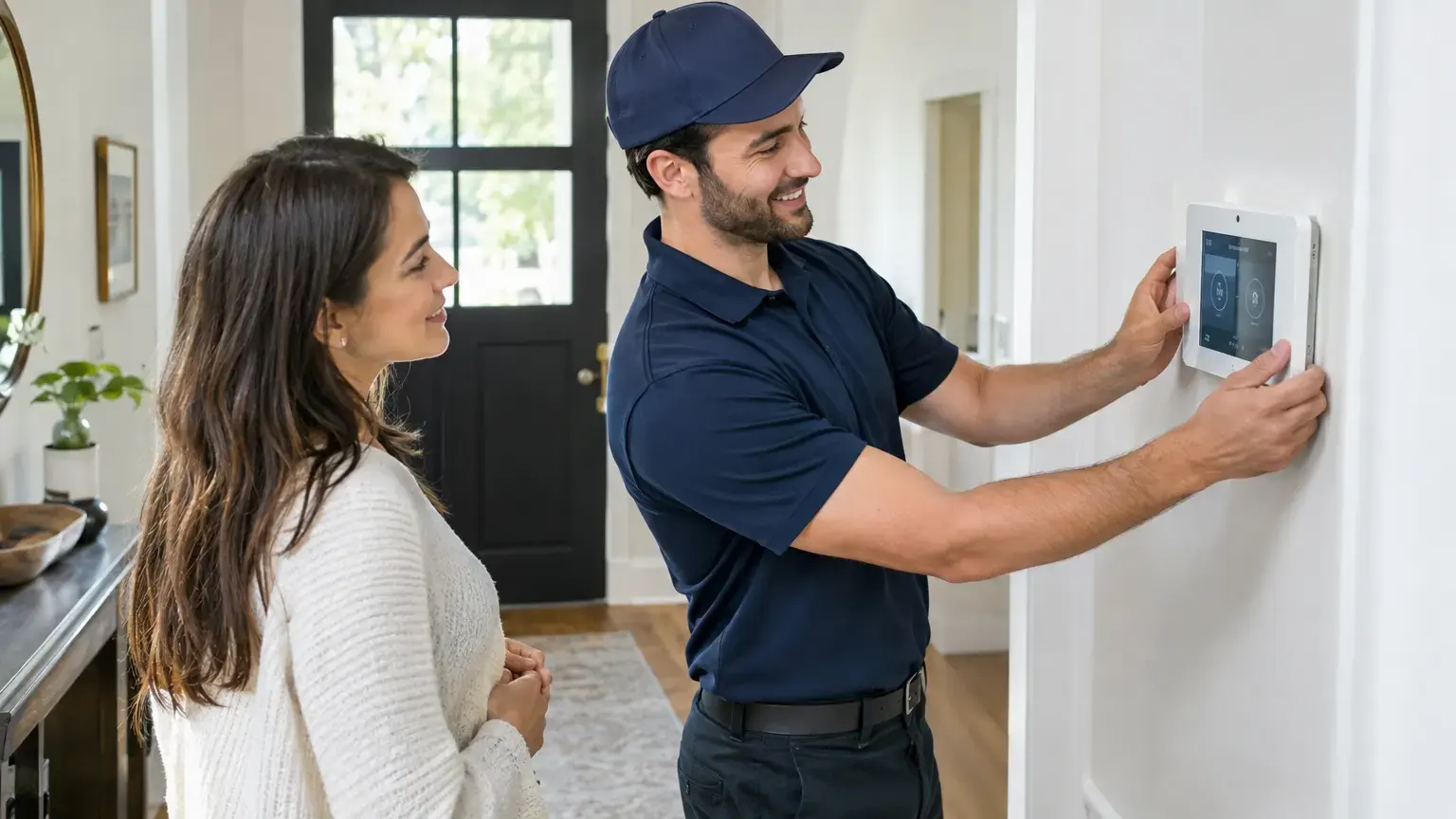
MFPG Security is an independent ADT Authorized Dealer based in Monroe, Louisiana. We are not ADT corporate and not a local ADT branch. We help you choose equipment, and your system is set up through professional installation. In a city where the median home dates to 1958, that matters. Installers take care mounting sensors on plaster, old wood trim and steel windows, and they keep visible equipment off historic facades where possible. In condo and apartment buildings, installers work within the building's access and mounting rules.
After installation, ADT handles 24/7 professional monitoring for your District home. Say a sensor trips while you sit in a downtown office, stay late on the Hill or serve away from Joint Base Anacostia-Bolling. An ADT agent works to confirm the alarm, then reaches emergency services following local protocol. Smoke, carbon monoxide and flood signals go to the same monitoring team. That matters in attached rowhouses and stacked condos, where a problem in your unit can quickly reach a neighbor.
Cable and fiber lines in the District often share poles with the same street trees that fall in summer storms. Cellular backup keeps a communication path open when that service drops. From the ADT+ app you can arm the system before a Metro ride home, check the alley camera, unlock the door for a dog walker and see alerts while you travel.
Before your system goes live, check whether the District requires your alarm to be registered. Alarm registration in DC has been handled through the Metropolitan Police Department. Requirements and any fees can change, so confirm the current rules with the District directly. We can walk you through what to look for on your quote call.
Questions about adt home security in washington? A specialist can help.
Call 833.842.0818Built for DC weather
Getting ready for storms, snow and summer heat
Washington's weather swings from humid summers with violent afternoon storms to winter snow and ice that can slow the city for days. Older rowhouses with uninsulated rear additions and pipes along outside walls are the most likely to freeze. A smart thermostat lets you check and adjust heat from the ADT+ app, so a boiler that quits while you are away does not go unnoticed.
Water often causes trouble in the District's older homes. Flood and water sensors near basement floor drains, under kitchen sinks, beside the washer and next to radiator valves give early warning of a backup or slow leak. Pair them with monitored smoke and carbon monoxide detection, especially if you rely on space heaters or a gas stove during an outage. Add cellular backup so alerts can still go out when the internet drops.
Talk to an ADT specialist right now.

Questions
ADT Home Security in Washington: common questions
I rent in DC. Can I still get an ADT system?
Yes. Renters in Washington often pick wireless ADT equipment: sensors for doors and windows, an indoor camera, smoke and carbon monoxide detection and, if the landlord permits, a video doorbell. Little or no drilling is needed, and much of it can move with you to the next place. Read your lease for limits on outdoor devices and smart locks, and ask your landlord before you change any lock.
Does ADT work in a condo or apartment high-rise?
It does. In buildings in Navy Yard, NoMa, the Wharf or along the Connecticut Avenue corridor, the building controls the lobby and garage, so your system focuses on your unit. That means a door sensor, motion detection, an indoor camera, a smart lock and monitored smoke and carbon monoxide detection. Ask management about hallway mounting rules before adding a doorbell camera outside your door.
I live in a historic district. Will security equipment cause problems?
Exterior changes in many DC historic districts, such as Capitol Hill, Georgetown and Dupont Circle, can require review, and condo boards and HOAs often have their own rules. Most ADT equipment goes inside, and wireless sensors avoid drilling into brick or original trim. For cameras and doorbells on the facade, check with your board or the DC Historic Preservation Office first. Your installer can suggest discreet placement.
What happens to my system during a power outage or big storm?
Cellular backup keeps a monitored communication path open if your internet goes down. That matters when summer storms or winter ice take down lines in tree-heavy neighborhoods like Takoma and the Palisades. Ask about backup power for your panel on your quote call, so monitored smoke, carbon monoxide and flood sensors can keep reporting and the ADT+ app can keep you informed while you are away.
How should I set things up before traveling or leaving for recess?
Arm the system from the ADT+ app, and use cameras on the front stoop and alley so you can check deliveries and activity. A smart lock lets you give a neighbor or pet sitter a code without handing out keys. Set the smart thermostat to hold heat in winter, and make sure flood sensors are in place, since a basement backup can go unnoticed for days.
Does Washington require an alarm permit or registration?
Alarm registration in the District has been handled through the Metropolitan Police Department. Requirements and any fees can change, so check the current rules with the District before or right after your system is installed. Registering when required helps alarm calls get handled properly and may help you avoid false alarm fees.
I just bought a new condo or townhouse. Do I still need a system?
New construction in areas like Union Market, Navy Yard or Hill East often comes with good locks and building access control. Those do not watch your unit or alert anyone when you are gone. A monitored ADT system adds intrusion alerts, smoke and carbon monoxide monitoring, and water leak detection. That is useful in stacked units, where a leak upstairs can quickly become your problem.
What happens to my ADT system if I move to another DC neighborhood?
Moving is common here, whether from a Columbia Heights rental to a Brookland rowhouse or between condos with each new job. Wireless equipment can often be removed and set up at your new place, though a new layout may need a different number of sensors. Call us before you move so we can review your new home and talk through your options.
MFPG Security is an independent ADT Authorized Dealer. ADT, ADT+ and related marks are trademarks of ADT LLC. Equipment, features and offers vary by package and location; call for details. Page reviewed October 15, 2026.
ADT services for homes in Washington
- Home securityHome SecurityBuild an ADT home security system from door, window, motion and glass break sensors plus a touchscreen panel, installed and monitored 24/7. Call 833.842.0818.
- Security camerasSecurity CamerasAdd ADT security cameras to see your home from your phone, get alerts for people and vehicles, and pair video with 24/7 ADT monitoring. Call 833.842.0818.
- Smart homeSmart HomeADT smart home devices put locks, lights, thermostat, garage door and plugs in one app, alongside your 24/7 monitored alarm. Call 833.842.0818.
- Professional monitoringMonitoringADT 24/7 professional monitoring watches your alarm day and night and contacts you or emergency services when a sensor triggers. Call MFPG at 833.842.0818.
- Life safetyLife SafetyADT life safety detectors cover smoke, fire, carbon monoxide and water leaks, with 24/7 ADT monitoring. Installed by MFPG in Monroe, LA. Call 833.842.0818.
- Professional installationInstallationMFPG Security technicians install your ADT system, test every device and show you how to use it. ADT monitors it 24/7. Call 833.842.0818 to schedule.
- Current offerDealsSee the current MFPG Security ADT deals: free security equipment ($850 value) with a $99 installation charge and 24/7 monitoring. Call 833.842.0818 for details.